Tao An · AI researcher
How production LLMs remember and when to act.
I study LLM memory, retrieval, and when AI assistants should act. My research draws on a decade in tech and systems shipped for legal and healthcare.
Explore the work
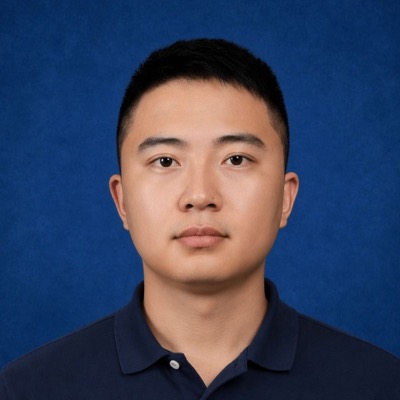
About Tao An
Founder of FIM Labs Pte Ltd (Singapore · Beijing), building FIM One, a source-available agent platform that connects agents to the enterprise systems a company already runs. I work across research and delivery, from agent memory to production AI for government and enterprise clients.
MS in Artificial Intelligence, Hawaii Pacific University (2026). Working in AI since 2021, with interests in memory architectures, knowledge graphs, and intervention timing for always-on assistants.
News
Recent research, writing, and work in the open.
Consensus Density Predicts Output Dispersion in Aligned LLMs (with Shuai Feng) accepted at TMLR, with a five-minute video summary and an interactive note.
Recombination or Discovery? accepted as a poster at the NeurIPS 2026 Workshop on AI for Meta-Science (AI4MetaScience, non-archival).
When Should the Agent Speak? published in TMLR (Transactions on Machine Learning Research), a survey of intervention timing for always-on assistants.
New interactive note: Same Tool, Opposite Verdicts, the companion to the HHAI 2026 paper.
Earlier updates 2025–2026
Fixes merged upstream in openai-agents-python, docling, acme.sh, and docx-editor. Upstream contributions
New preprint: Recombination or Discovery?, a retrieval-grounded novelty audit of machine-generated research papers.
New preprint: Weakening in Real Time, on the decade-long decoupling of artifact reuse and citation.
AI as Equalizer or Amplifier? published in the HHAI 2026 proceedings (IOS Press, FAIA vol. 423, open access).
New interactive notes: citation decoupling, intervention timing, and the ACL 2026 citation audit.
Joined the NeurIPS 2026 Ethics Review Committee.
AI as Equalizer or Amplifier? accepted to HHAI 2026 (Brussels; IOS Press proceedings).
New preprint: Fidelity Before Structure, a controlled ablation of memory representations for long LLM conversations.
Interviewed by Sanjay Singhania on Medium: The Truth About AI Right Now, on what actually works in real deployments.
New preprint: Cognitive Workspace: Active Memory Management for LLMs.